2025 Impact Report, "Big Bets, Real Results," highlights $32 billion in total capital mobilized into solutions for millions of people in Africa, Asia, Latin America & the Caribbean, Europe, the United States, and more
NEW YORK, May 18, 2026 /PRNewswire/ -- The Rockefeller Foundation today released its 2025 impact report, Big Bets, Real Results, detailing a year of strategic investments aimed at lifting up some of the world's most vulnerable people and solving humanity's most persistent problems. The report details the Foundation's 2025 work, including big bets on Universal Energy Abundance, Food is Medicine in the United States Regenerative School Meals around the world, to accelerate the reach of frontier technology, community-driven models, and decisive data across its core focus areas. Amid a volatile global landscape and a historic decline in global aid, the 113-year-old philanthropic organization successfully awarded more than US$350 million, directly mobilized US$3 billion, and helped mobilize an additional US$29 billion in indirect capital—reaching 731 million people worldwide.

Dr. Rajiv Shah, President of The Rockefeller Foundation, and Denis Karema, Co-Founder and CEO of SokoFresh, visiting a farm outside Nairobi, Kenya, benefiting from solar-powered refrigeration thanks to investments by the Global Energy Alliance for People and Planet in collaboration with CLASP.
"Disruption changes how we work, but not who we work for. Last year the world's commitment to helping those in need contracted sharply — and people who depended on this paid the price. But it also revealed the uncommon courage of leaders across the United States, Africa, Asia, and Latin America who chose to raise their ambitions and go big. We are proud to stand with them and share this report, which proves it is still possible to deliver results at scale for vulnerable people, despite the disruption that makes their lives worse and our work harder," said Dr. Rajiv J. Shah, President of The Rockefeller Foundation. Read his full statement here.
2025 Impact by the Numbers
The Foundation awarded more than $350 million across 235 grants and program-related investments to 204 unique partners in 2025. The following metrics highlight the reach, capital mobilization, and environmental outcomes of the 2025 portfolio:
- Results for People:731 million people accessed or used a charitable product or service funded by the Foundation. Of those reached, 3 million people experienced a clear, measurable outcome from a direct intervention.
- Unlocking Investment: The Foundation directly mobilized $3 billion and helped scale concepts that indirectly mobilized an additional $29 billion in capital—$32 billion in total—for charitable interventions through the work of the Global Energy Alliance for People and Planet and other partners.
- Protecting the Planet: Efforts resulted in 84 million tons of CO₂e —a metric that accounts for the total global warming potential of all greenhouse gases avoided, reduced, or sequestered—and 23 million hectares of land protected or restored, an area roughly the size of Utah, the United Kingdom, Ghana, Laos, or Guyana.
- Global Funding Reach: Charitable investments reached every major region, including more than $133 million in Africa; $93 million in Asia and Oceania; $59 million in Latin America and the Caribbean; and $49 million in the United States and North America. Detailed regional breakdowns are available in the Full 2025 Financial Overview.
"When the world pulls back, philanthropy has to lean in," said Elizabeth Yee, Executive Vice President of The Rockefeller Foundation. "From AI-powered disease alerts in Latin America to school meals in Kenya and clean energy in Haiti, 2025 showed that the right investments — made with the right partners —deliver results at scale, strengthen markets, and create curable impact for communities."
Stories from the Field: Human Impact in Action
The 2025 report highlights the individuals at the center of the Foundation's work and its 'Big Bets' organized across three strategic pillars:
- Frontier Tech: Bridging the public-private gap to ensure the latest technological breakthroughs reach the people who will benefit most, first.
- Community-Driven Models: Strengthening local systems and infrastructure to ensure lasting progress is led by and for the communities it serves.
- Decisive Data: Tapping into unconventional data and evidence to enable the swift decision-making required to save lives and scale world-changing ideas.
To access the full list of stories, click here, with following snapshots illustrating this work in action:
- Universal Energy Abundance (India, Zambia, Haiti): With Foundation support, the Global Energy Alliance is helping scale India's first standalone utility-scale battery energy storage system in New Delhi, India, which has helped 100,000+ people access reliable electricity. In Zambia families now are able to operate their oil extractors using clean, affordable solar power — producing and selling cooking oils to their community, at a fraction of the cost. As result of investing modular, solar-powered mesh grids in northwest Haiti, 21,000 people were connected to reliable electricity. Together, these innovations are providing the reliable power necessary to stabilize grids and support livelihoods. Globally, the expected lifetime impact for all deployed and deployment-ready Alliance projects includes 91 million people reached with new or improved energy access, jobs and livelihoods improved for 3.1 million people, and approximately 296 million tonnes of carbon emissions prevented.
- Regenerative School Meals (Global): In Makueni County, Kenya, the introduction of omena fish into school menus through Lattice Aquaculture is helping small-scale producers stabilize food supply chains and improve student nutrition. The Foundation's partnership with the World Food Programme is helping improve how children are fed in Benin, Burundi, Ghana, Honduras, India, and Rwanda, ensuring every plate of food creates positive ripple effects, and the results show up where they matter most: in classrooms and communities.
- Food is Medicine (United States): Community Servings provides over a million medically tailored, nutritious, homemade meals every year to chronically- and critically-ill individuals in Massachusetts and Rhode Island. Because Food is Medicine programs need to be covered by both public and private health insurance in order to be accessible to eligible people across the U.S., the American Heart Association's Health Care by Food initiative supported 28 studies across the country — including in Alabama, California, Louisiana, New York, Ohio, and Texas — to generate evidence on which Food is Medicine programs are most effective.
- Climate-Smart Tech (Brazil, India, Kenya, United States): AI-powered app, FarmerChat, created by Digital Green, provides real-time, multilingual guidance, tailored to a farmer's specific location and weather conditions. Last year, 83% of women users reported being much more confident investing in their farms because of FarmerChat, which had more than 1.6 million downloads and handled more than 10 million queries across six countries, including Brazil, India, and Kenya. Across the United States, the Foundation supported Invest in Our Future to advance clean energy projects across 45 states, reaching more than 770 counties and 400 cities and towns
- Embracing Local Practices to Speed Reforestation (Brazil): In northeastern Brazil, Health in Harmony is supporting women-led coalitions of forest guardians to establish nurseries to reverse rainforest deforestation and protect biodiversity, while creating sustainable economic opportunities. As a result, nearly 20,000 community members from nine Indigenous Peoples territories received support to protect 2 million hectares of rainforest.
- Innovating Early Health Alerts (Brazil & Colombia): Thanks to innovative data modeling through the Dengue.AI platform, health officials in Cali, Colombia are able to predict and prevent outbreaks with 93% accuracy, which has protected 2.2 million people from the mosquito-borne virus. In Brazil, the Alert-Early System of Outbreaks with Pandemic Potential (ÆSOP), which was developed with local health authorities, has helped prevent 86 outbreaks from becoming full-scale crises. These real-time interventions are protecting vulnerable communities from climate-sensitive health threats.
- AI for Civic Good (South Africa): The Foundation is investing in digital tools to increase civic participation. In Cape Town, South Africa, through Turn.io, it's collaborating with the city's data analytics hub to build the country's first AI-powered platform for residents to participate in local government—in their own language and on their own terms—reaching approximately 100,000 people.
"As The Rockefeller Foundation marks 60 years of its Africa Regional Office, it reflects a broader shift in the future of development. Amid aid cuts, geopolitical tensions and conflict, climate impacts, and political change, progress is becoming harder to sustain. Against this backdrop, the focus is increasingly on strengthening African capacity across health, education, and energy, and on African-led solutions and leadership, alongside the role of philanthropic capital. The Foundation's latest Impact Report highlights how we are reimagining progress through mission-driven action and partnerships." ― William Asiko, Senior Vice President and head of The Rockefeller Foundation's Africa Regional Office
"In 2025, our work in Asia proved that frontier technology like battery storage and AI-powered farming tools are not just innovations—they are essential lifelines. By reaching nearly 94 million people across the region, we are demonstrating how decentralized energy and climate-smart data can secure livelihoods even as the global climate becomes more unpredictable." ― Deepali Khanna, Senior Vice President and head of The Rockefeller Foundation's Asia Regional Office
"During the first year of activity of the LAC Regional Office, we prioritized local partnerships and community-driven models to protect both the planet and the people across Latin America and the Caribbean. From using Artificial Intelligence to predict dengue outbreaks in Cali (Colombia) to reforestation efforts in Maranhão (Brazil), our US$59 million investment in the region is focused on building local resilience that can withstand global volatility." ― Lyana Latorre, Vice President and head of The Rockefeller Foundation's Latin America and Caribbean Regional Office
The full 2025 Impact Report is available for digital exploration and download at impactreport.rockefellerfoundation.org.
About The Rockefeller Foundation
Investing $30 billion over the last 113 years to promote the well-being of humanity, The Rockefeller Foundation is a pioneering philanthropy built on unlikely partnerships and innovative solutions that deliver measurable results for people in the United States and around the world. We leverage scientific breakthroughs, artificial intelligence, and new technologies to make big bets across energy, food, health, and finance. For more information, sign up for our newsletter at www.rockefellerfoundation.org/subscribe and follow us on X @RockefellerFdn, Instagram @rockefellerfdn, YouTube @RockefellerFdn, and LinkedIn @the-rockefeller-foundation.
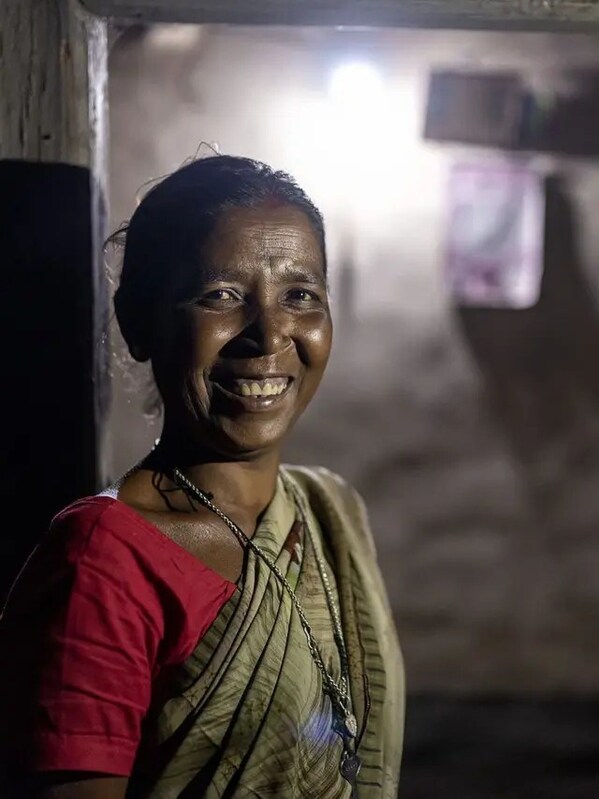
We see our job as helping bridge the gaps — between innovation and adoption, supply and demand, data and decisions — to build long-lasting impact. Getting results with frontier technology doesn't always require a breakthrough. Sometimes it just requires a new way of thinking about the tools we already have. AI is already working. Our job is to make sure it works for those who need it most.
source: Rockefeller Foundation
獨家優惠【etnet x 環球海產】用戶專享全場95折,特價貨品更可折上折。立即使用優惠代碼【ETN1WWS】,選購五星級酒店級海鮮► 立即瀏覽